
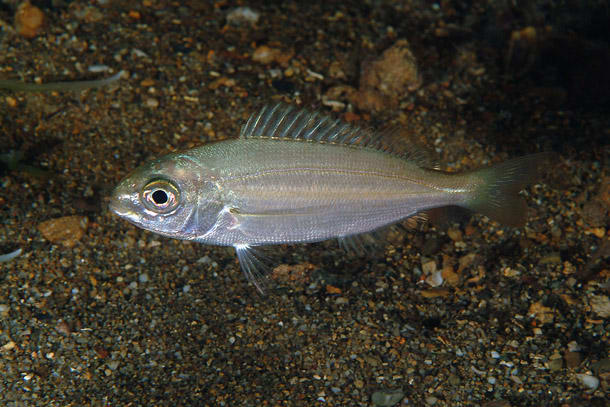
Taxonomy
- Kingdom
- Animalia
- Phylum
- Chordata
- Class
- Actinopterygii
- Order
- Siluriformes
- Family
- Sparidae
- Genus
- Pagellus
- Species
- acarne
Habitat
Axillary seabream primarily inhabit coastal waters of the Eastern Atlantic and Mediterranean Sea, favoring rocky and sandy bottoms from shallow depths to about 200 meters. They are commonly found around reefs, wrecks, and structures that provide shelter and foraging opportunities. This species avoids extremely deep or turbid waters.
Diet
Axillary seabream are carnivorous, feeding mainly on crustaceans like crabs and shrimp, mollusks, and polychaete worms. They also consume small fish and benthic invertebrates, using their strong jaws to crush shells. Feeding activity peaks during the day when they actively forage over the seabed.
Behavior
Axillary seabream are schooling fish that form loose groups for protection and feeding, making them more active in larger numbers. They are diurnal, spending daylight hours foraging and resting at night in sheltered areas. These fish can exhibit territorial behavior around food sources and are generally cautious, quickly scattering when threatened.
Fishing
Anglers targeting the axillary seabream, a popular sport fish in the Atlantic and Mediterranean regions, should focus on bottom fishing techniques using light tackle to effectively hook these cautious schooling fish around reefs, wrecks, and rocky or sandy bottoms in depths up to 200 meters; cast with bait such as live shrimp, crabs, or worms, or use jigs and small lures that mimic their prey like small fish and benthic invertebrates for the best results. Recommended tackle includes a medium-light rod with 10-20 lb test line, a sensitive reel, and a sturdy hook to handle their strong jaws, ensuring a fun and sustainable fight. The best season is spring and summer when they are most active during spawning and feeding, with peak times in the daytime over the seabed; target areas like the coasts of France, Italy, or Greece where regulations such as slot limits and seasonal closures serve as effective management tools to maintain healthy populations and support conservation efforts funded by angler license fees. The IGFA all-tackle world record for seabream species isn't specifically listed for axillary seabream, but individuals can reach up to 1 lb 5 oz, making them a rewarding catch for conservation-minded fishers who practice catch-and-release to bolster stocking programs and protect these Least Concern species through regulated fishing that funds habitat restoration.
Conservation Status
Listed as Least Concern by IUCN.