
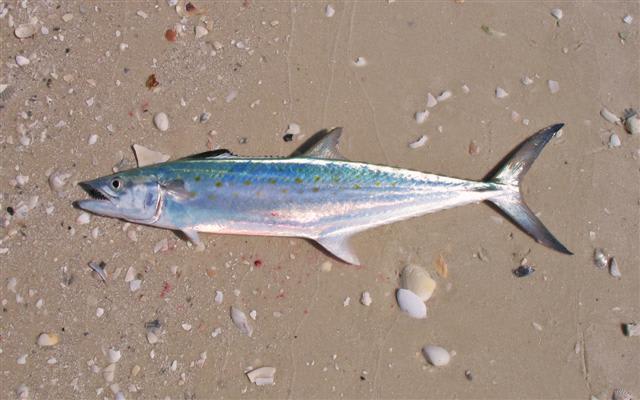
Taxonomy
- Kingdom
- Animalia
- Phylum
- Chordata
- Class
- Actinopterygii
- Order
- Perciformes
- Family
- Scombridae
- Genus
- Scomberomorus
- Species
- munroi
Habitat
This species inhabits coastal and offshore waters of the western Pacific and eastern Indian Ocean, particularly around Australia and Papua New Guinea. It prefers warm temperate to tropical marine environments, often near continental shelves, reefs, and areas with strong currents. They are commonly found in depths from 10 to 200 meters where baitfish are abundant.
Diet
Australian spotted mackerel primarily feed on small schooling fish such as sardines, anchovies, and herring. They also consume squid and crustaceans, using their speed to chase and ambush prey. Feeding activity peaks during the day in schools, allowing them to coordinate hunts effectively.
Behavior
Australian spotted mackerel are highly schooling fish, forming large groups for protection and cooperative hunting. They are fast swimmers and exhibit migratory patterns, moving inshore during warmer months to feed. These fish are aggressive predators, often striking baitfish schools with speed and precision, and they can be territorial around feeding areas.
Fishing
Australian spotted mackerel are a thrilling sport fish for anglers in the western Pacific and eastern Indian Ocean, particularly around Australia and Papua New Guinea, where targeted fishing supports conservation through license fees that fund habitat restoration and population monitoring. Use trolling with lures or live bait as the most effective technique, casting jigs or spoons when schools are spotted near the surface to capitalize on their aggressive strikes; always opt for catch-and-release on smaller fish to aid in maintaining sustainable populations. Gear up with medium-heavy rods (7-9 feet) paired with reels spooled with 20-30 lb monofilament or braided line, and sturdy hooks to handle their powerful runs, while lures like metal jigs, flashy spoons, or live baits such as sardines and anchovies mimic their primary prey for optimal results. The best season is summer when they migrate inshore to warmer coastal waters, with peak activity during daylight hours when feeding frenzies occur; target them in depths of 10-200 meters around reefs, continental shelves, and areas with strong currents where baitfish schools are abundant. Record sizes include an IGFA all-tackle world record of 20 pounds 6 ounces, highlighting their impressive growth potential. Conservation efforts, such as slot limits and bag restrictions in regions like New South Wales, are effective management tools that ensure healthy stocks, with angler-funded programs playing a key role in protecting these Near Threatened species through regulated fishing practices.
Conservation Status
Listed as Near Threatened by IUCN.