
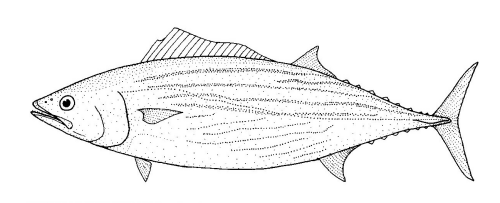
Taxonomy
- Kingdom
- Animalia
- Phylum
- Chordata
- Class
- Actinopterygii
- Order
- Perciformes
- Family
- Scombridae
- Genus
- Sarda
- Species
- australis
Habitat
Australian bonito primarily inhabit coastal and offshore waters of the western Pacific and eastern Indian Oceans, often near the surface over continental shelves. They prefer temperate to subtropical regions and are commonly found around Australia, New Zealand, and nearby islands. These fish migrate seasonally, following warmer currents and prey availability.
Diet
Australian bonito feed mainly on small fish such as anchovies, sardines, and mackerel, as well as squid and crustaceans. They hunt in schools using high-speed chases to capture prey, typically during daylight hours when they are most active. Their feeding behavior is aggressive, allowing them to consume large quantities in short periods.
Behavior
Australian bonito are highly schooling fish, forming large groups for protection, feeding, and migration. They are fast swimmers and exhibit migratory patterns in response to seasonal changes in water temperature and food sources. These fish are most active during the day and can display aggressive behaviors when pursuing prey. They are known to jump out of the water during feeding frenzies.
Fishing
Target Australian bonito, a hard-fighting sport fish in the mackerel family, using trolling with lures or live bait as the most effective technique, allowing you to cover large areas of open water where they school and feed aggressively; casting with metal jigs or spoons near schools also works well for exciting surface action. Use medium-heavy rods with 20-30 pound test line and reels with a strong drag system to handle their high-speed runs and acrobatic jumps, paired with lures like silver spoons, skirted trolling lures, or live bait such as anchovies, sardines, or squid to mimic their natural prey. The best season is summer when they migrate and spawn in warmer offshore waters, with peak activity during daylight hours, especially mid-morning to late afternoon when they hunt in schools near the surface over continental shelves around Australia, New Zealand, and nearby islands—focus on areas with strong currents and baitfish concentrations for the highest success. The IGFA all-tackle world record stands at 20 pounds 11 ounces, caught off Australia, showcasing the thrill of pursuing these powerful fish. Conservation-wise, Australian bonito are managed under stable populations as Least Concern by the IUCN, supported by angler-funded programs like license fees that protect marine habitats and promote catch-and-release practices to ensure sustainable stocks for future generations.
Conservation Status
Listed as Least Concern by IUCN.