
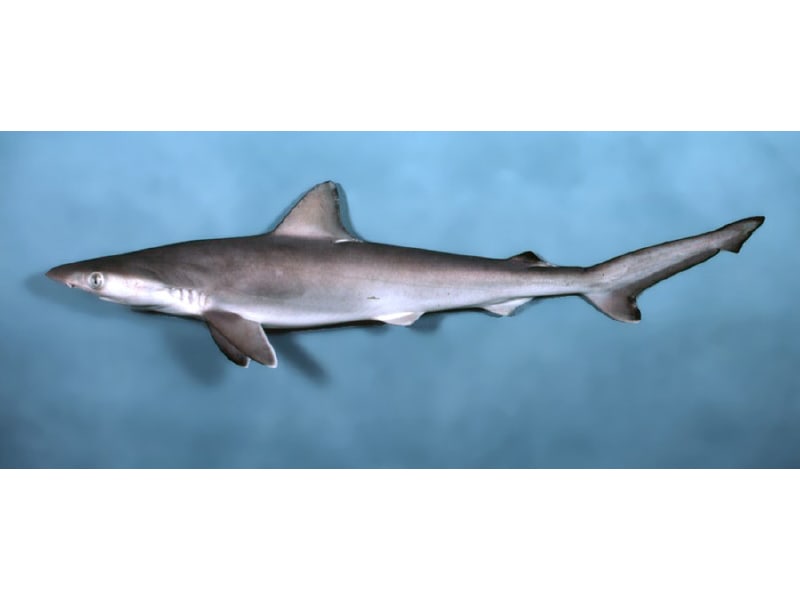
Overview
A distinctive feature is that juveniles have black edges on the dorsal and caudal fins.
Taxonomy
- Kingdom
- Animalia
- Phylum
- Chordata
- Class
- Chondrichthyes
- Order
- Squaliformes
- Family
- Sphyrnidae
- Genus
- Rhizoprionodon
- Species
- terraenovae
Habitat
prefer to live in warmer shallow coastal waters.
Diet
mostly consists of bony fish, worms, shrimp, crabs, and mollusks.
Behavior
Atlantic sharpnose sharks are typically solitary or found in small groups, often patrolling shallow coastal waters. They are most active during the day, hunting for food along the ocean floor, and exhibit curious behavior towards potential threats or bait. These sharks are not highly territorial but may migrate seasonally to follow prey or warmer waters.
Fishing
The Atlantic sharpnose shark is a popular sport fish in the Western Atlantic, from the U.S. East Coast to Mexico, offering exciting catches in shallow coastal waters that help fund conservation through angler license fees and excise taxes. Use bottom fishing or trolling techniques with heavy tackle, including a stout rod, 20-50 lb test line, and circle hooks for safe handling and high survival rates in catch-and-release practices. Opt for baits like live shrimp, small fish, or cut bait such as squid and mullet to mimic their diet of bony fish and crustaceans. The best season is summer when they migrate to warmer shallow waters, with peak activity during the day; target areas like nearshore reefs, sandbars, and coastal inlets in states like Florida and North Carolina. The IGFA all-tackle world record is 18 pounds 8 ounces, caught in 2000, highlighting the species' manageable size for recreational anglers. As a Least Concern species per the IUCN, regulations such as catch-and-release in many areas serve as effective management tools to sustain populations, ensuring that fishing supports broader conservation efforts like habitat protection and stocking programs in these vital marine ecosystems.
Conservation Status
Listed as Least Concern by IUCN.