
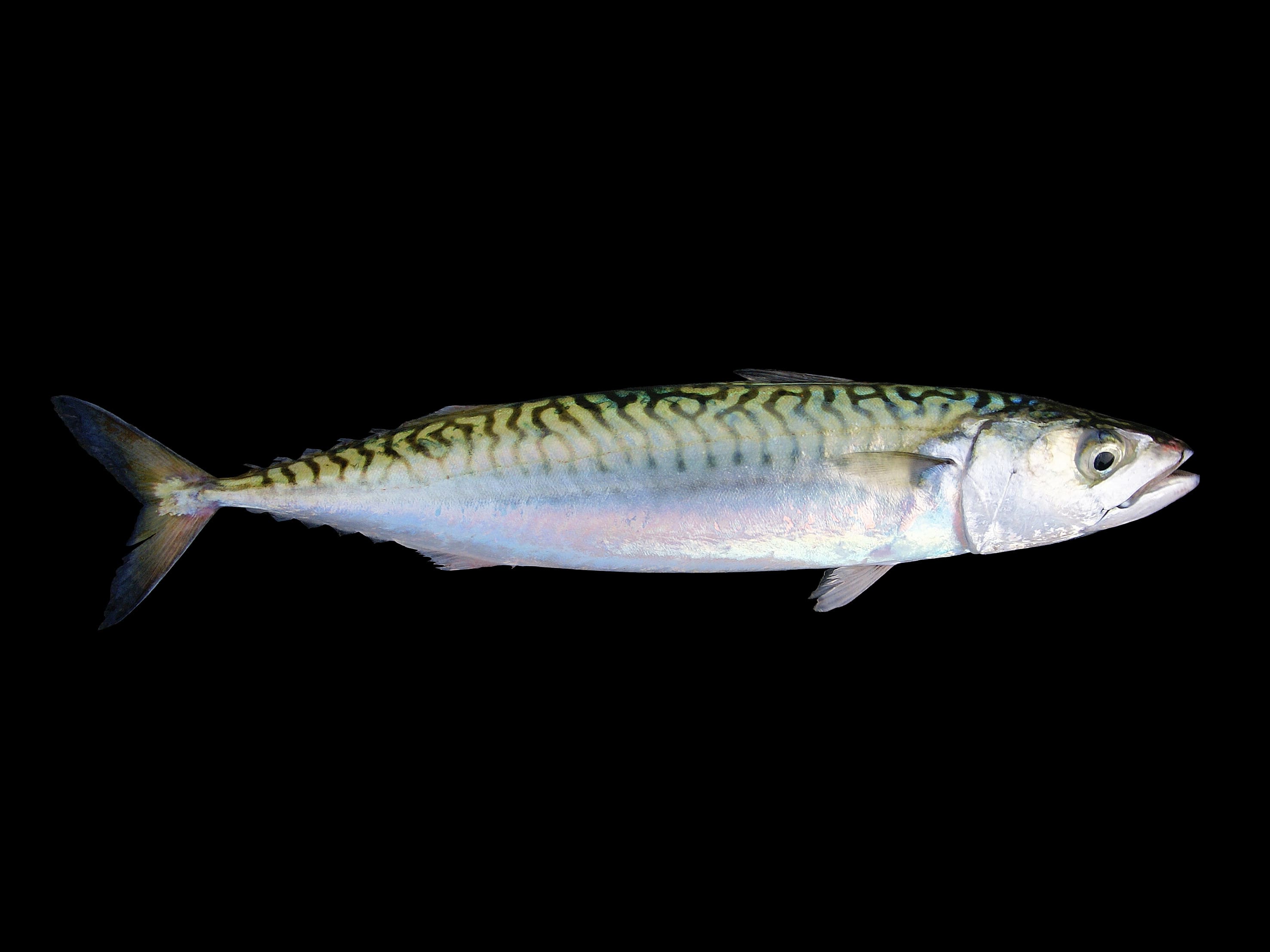
Taxonomy
- Kingdom
- Animalia
- Phylum
- Chordata
- Class
- Actinopterygii
- Order
- Perciformes
- Family
- Scombridae
- Genus
- Scomber
- Species
- scombrus
Habitat
Atlantic mackerel primarily inhabit pelagic waters of the North Atlantic Ocean, from the surface down to about 300 meters, preferring temperate regions with temperatures between 8-20°C. They form large schools around areas with high plankton density, such as continental shelves and open ocean zones. This species is commonly found in both coastal and offshore environments, migrating seasonally to follow food sources.
Diet
Atlantic mackerel feed mainly on small fish like sand eels and herring, as well as shrimp, squid, and plankton such as copepods. They exhibit schooling behavior while hunting, often chasing prey in coordinated groups. Feeding is most active during the day when visibility is better for spotting food.
Behavior
Atlantic mackerel are highly social fish that form large, fast-moving schools for protection and efficient feeding. They are migratory, traveling long distances seasonally to warmer waters in winter and cooler, food-rich areas in summer. These fish are diurnal, most active during the day, and exhibit rapid, agile swimming to evade predators or pursue prey.
Fishing
Anglers targeting Atlantic mackerel will find it a rewarding sport fish that supports conservation through license fees and excise taxes, funding essential habitat restoration in the North Atlantic. Employ trolling with small, shiny lures like spoons or jigs, or cast lightweight setups to mimic baitfish, as these techniques capitalize on their schooling behavior for exciting, fast-paced action. Use light to medium spinning rods with 10-20 lb test line, paired with reels that handle quick runs, and opt for baits such as live shrimp, sand eels, or small artificial lures to entice strikes. The best seasons are spring and summer during their migrations to coastal and offshore waters, with peak activity in the early morning or late afternoon when they actively feed on plankton and small fish. Focus on pelagic habitats over continental shelves in the Northeast and Northwest Atlantic, including areas like Cape Lookout or the Southwestern Baltic Sea, where high plankton density draws large schools—look for surface disturbances or bird activity as indicators. The IGFA all-tackle world record is 5.78 kg (12 lb 12 oz), highlighting the species' potential. Effective management tools, such as regulated quotas and seasonal closures in regions like the EU and Canada, help maintain stable populations, with angler-funded programs playing a key role in protecting these migratory stocks and promoting catch-and-release to ensure long-term sustainability.
Conservation Status
Listed as Least Concern by IUCN.