
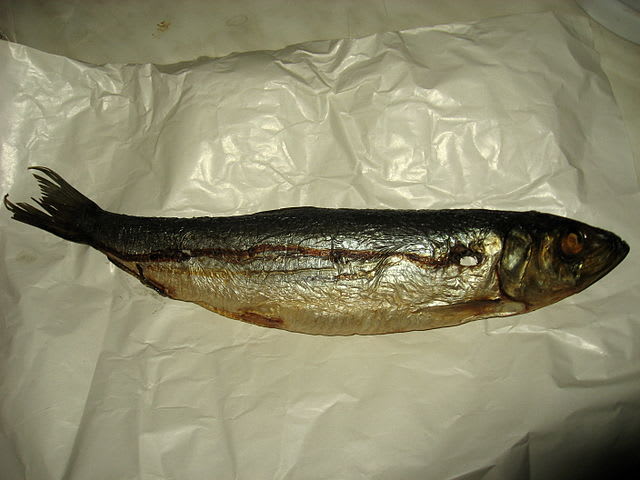
Taxonomy
- Kingdom
- Animalia
- Phylum
- Chordata
- Class
- Actinopterygii
- Order
- Gadiformes
- Family
- Clupeidae
- Genus
- Clupea
- Species
- harengus
Habitat
Atlantic herring primarily inhabit pelagic waters of the North Atlantic Ocean, from shallow coastal areas to depths of about 200 meters. They prefer cold to temperate seas, often forming massive schools over continental shelves and near upwelling zones where nutrients are abundant. These fish are commonly found in regions like the North Sea, Baltic Sea, and off the coasts of Canada and Europe.
Diet
Atlantic herring feed mainly on zooplankton such as copepods, krill, and small crustaceans, along with fish larvae and occasionally small fish. They use a filter-feeding method, swimming with their mouths open to strain food from the water column. Feeding activity peaks at dawn and dusk when plankton are most concentrated.
Behavior
Atlantic herring are highly schooling fish, forming dense groups for protection against predators and to facilitate feeding. They exhibit seasonal migrations, traveling long distances to spawning grounds and feeding areas, and are most active during the day when they school near the surface. These fish show little territorial behavior, focusing instead on synchronized swimming to evade threats.
Conservation Status
Listed as Least Concern by IUCN.