
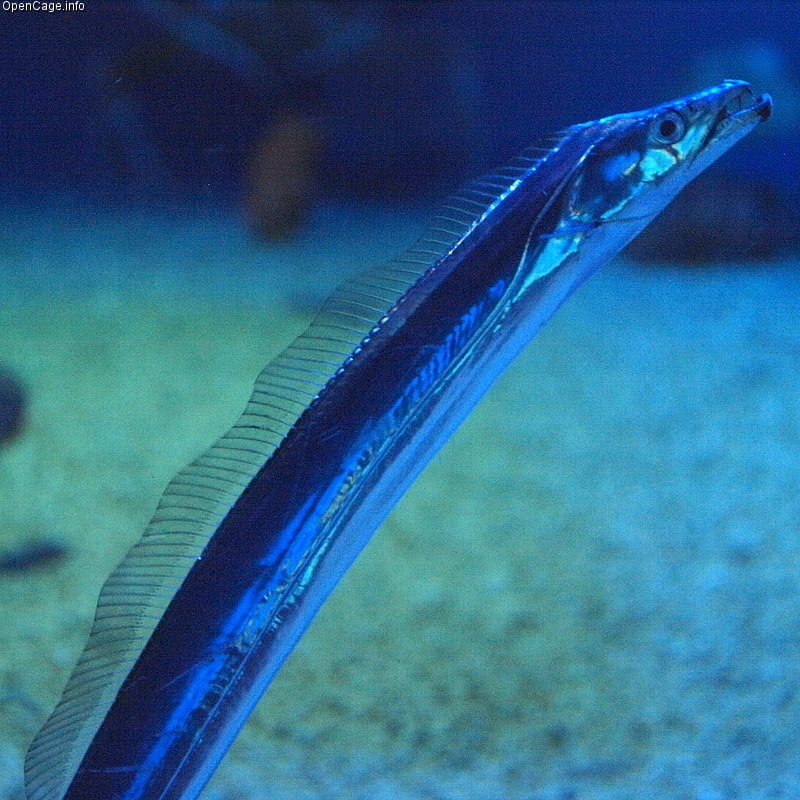
Taxonomy
- Kingdom
- Animalia
- Phylum
- Chordata
- Class
- Actinopterygii
- Order
- Perciformes
- Family
- Gempylidae
- Genus
- Trichiurus
- Species
- lepturus
Habitat
Atlantic cutlassfish inhabit tropical and subtropical marine waters, typically over continental shelves and slopes at depths of 100 to 400 meters. They prefer pelagic environments but can also be found in shallower coastal areas. Their range spans the Atlantic, Indian, and Pacific Oceans.
Diet
Atlantic cutlassfish primarily feed on small fish, squid, and crustaceans, using their sharp teeth to capture prey. They are nocturnal hunters, ambushing food items in open water during nighttime. Feeding occurs opportunistically when prey is abundant.
Behavior
Atlantic cutlassfish are generally solitary or form loose schools, actively swimming in midwater or near the bottom. They exhibit nocturnal activity, hunting at night and resting during the day in deeper waters. They are agile swimmers, using their elongated bodies for rapid, snake-like movements to evade predators or chase prey.
Fishing
Anglers targeting the Atlantic cutlassfish, a sleek and elusive predator found in tropical and subtropical waters across the Atlantic, Indian, and Pacific Oceans, can rely on trolling or jigging as the most effective techniques, using fast retrieves to mimic their nocturnal hunting style; focus on midwater depths of 100 to 400 meters over continental shelves and slopes, though they occasionally venture into shallower coastal areas for better success. Use medium-weight rods and reels with 20-30 pound test line, paired with lures like metal jigs, soft plastics, or bait such as live squid, small fish, or shrimp to entice strikes, as these replicate their primary diet of fish and crustaceans. The best season is year-round in warmer regions, with peak activity during summer months when waters are stable, and target them at night when they are most active and feeding aggressively. Focus on pelagic zones in areas like the Western Central Atlantic or Eastern Indian Ocean, where strong currents concentrate prey; always check local regulations, such as bag limits or size restrictions in places like the U.S. Atlantic coast, which serve as effective management tools to sustain healthy populations and support conservation efforts funded by angler license fees that protect marine habitats. The IGFA all-tackle world record stands at 12.57 kg (27 pounds 11 ounces), caught in Brazil, highlighting the thrill of this species while catch-and-release practices help maintain their stable, abundant population as noted by the IUCN Least Concern status.
Conservation Status
Listed as Least Concern by IUCN.