
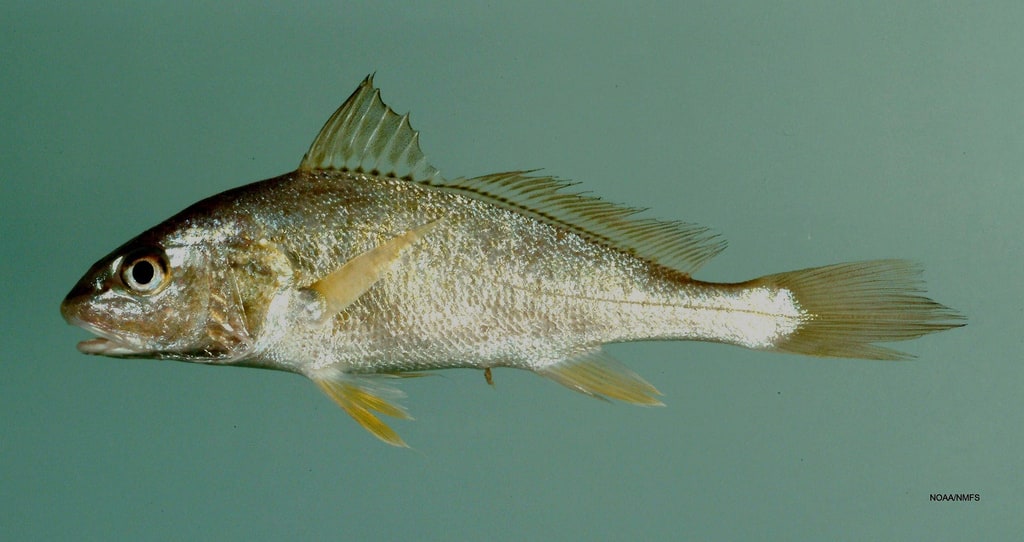
Taxonomy
- Kingdom
- Animalia
- Phylum
- Chordata
- Class
- Actinopterygii
- Order
- Perciformes
- Family
- Sciaenidae
- Genus
- Micropogonias
- Species
- undulatus
Habitat
Atlantic croakers inhabit coastal waters, estuaries, and bays with sandy or muddy bottoms, ranging from Massachusetts to the Gulf of Mexico. They prefer shallow areas up to 30 meters deep and tolerate a wide range of salinities, from marine to brackish environments.
Diet
Shrimp, Crabs, Detritus, Worms Crustaceans, Small Fish.
Behavior
Atlantic croakers are schooling fish that are primarily nocturnal, actively foraging on the ocean floor at night. They produce a distinctive croaking sound by vibrating muscles against their swim bladder, which aids in communication and is more frequent during spawning. These fish exhibit seasonal migrations, moving offshore in winter and returning to inshore areas in warmer months.
Fishing
Anglers targeting Atlantic croaker will find bottom fishing techniques highly effective, using a simple rig with a weight to keep bait on the seafloor, such as a 7-foot light to medium rod with a reel spooled in 10-20 pound monofilament line for sensitivity and control. Opt for baits that match their diet, like live shrimp, crabs, bloodworms, or small fish pieces, or try artificial lures such as jigs and soft plastics to mimic these prey; these setups work best in shallow coastal waters and estuaries. The prime seasons are spring through fall when croakers move inshore, with nighttime being the optimal time due to their nocturnal feeding habits, targeting habitats like sandy or muddy bottoms in bays and estuaries from Massachusetts to the Gulf of Mexico and Yucatan Peninsula. The IGFA all-tackle world record is 8 pounds 11 ounces, caught in Virginia in 2013, showcasing their potential size. Regulations, such as minimum size limits (often 9-10 inches) and daily bag limits in states like Florida and Texas, serve as effective management tools to sustain populations, with angler-funded programs through license fees supporting habitat restoration and conservation efforts that keep Atlantic croaker abundant and promote responsible fishing practices.
Conservation Status
Listed as Least Concern by IUCN.