
Overview
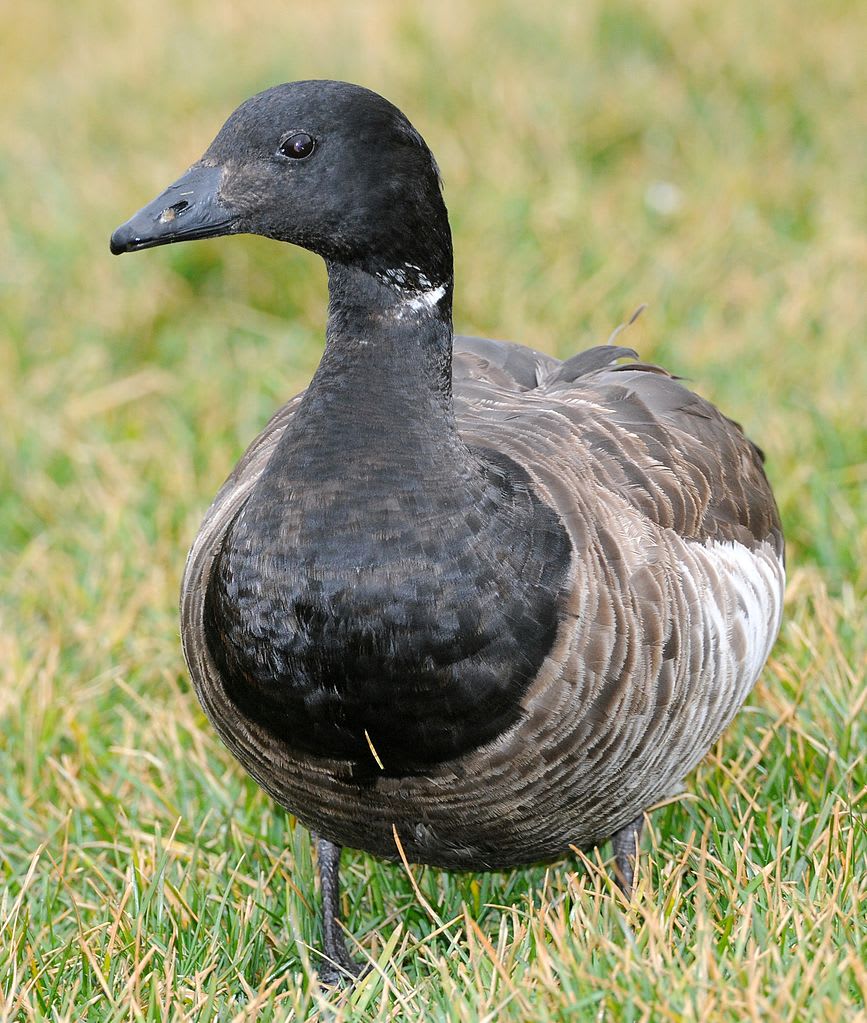
The tail of this species is black and very short. Although, the under-tail is pure white in color.
Taxonomy
- Kingdom
- Animalia
- Phylum
- Chordata
- Class
- Bird
- Family
- Anatidae
- Genus
- Branta
- Species
- bernicla
Habitat
This species breeds and feeds in low-lying wet coastal tundras. The nest is shpaed like a bowl lined with grass and is usually in a low-elevated loaction like a pond.
Diet
They feed on eel-grass, seaweed, sea lettuce, grass, and winter-sown cereals.
Behavior
Atlantic brant are highly social birds that form large flocks during migration and wintering, often flying in V-formations for energy efficiency. They are primarily diurnal, spending much of their day feeding in shallow coastal waters or fields, and exhibit territorial behavior around nesting sites during the breeding season. Pairs are monogamous and aggressively defend their territory from intruders.
Hunting
The Atlantic brant, a migratory goose, is a popular game bird hunted primarily in North America during regulated waterfowl seasons, with opportunities in the United States (such as Alaska, California, Maine, New Jersey, and New York), Canada (including British Columbia, Ontario, and Quebec), and parts of Mexico like Baja California. Effective hunting methods include using shotguns in 12-gauge or 20-gauge with non-toxic shot loads, employing decoys, calls, and layout blinds in coastal marshes or agricultural fields where brant feed on eelgrass and grains; focus on shot placement to the head or vital areas for a clean, ethical harvest, and time your hunts during early morning or late evening flights for the best success. The optimal season runs from late September to December, aligned with fall migration, with bag limits set by wildlife agencies like the U.S. Fish and Wildlife Service to ensure population sustainability; while trophy criteria are less formalized, larger birds with impressive wingspans or plumage are often sought for personal records. Regulated hunting of Atlantic brant supports conservation through hunter-funded programs like the Pittman-Robertson Act, which has channeled billions into habitat restoration and population monitoring, helping maintain stable numbers as classified by the IUCN Least Concern status, demonstrating how controlled harvests fund anti-poaching efforts and wetland protection across their range.
Conservation Status
Listed as Least Concern in IUCN.by IUCN.