
Overview
The urial is one of the smaller wild sheep species. The general color of this subspecies is reddish-tan with a narrow, grayish-white saddle patch. Underparts, lower legs and muzzle are white. Chest is dark brown. There is a narrow brown flank band and brown markings on front of the upper legs. In winter, there is a short black ruff on the lower neck and brisket. No bib. Relatively long, slender legs. Horns are supracervical, curving above and behind the neck. Females usually have small horns, but sometimes are hornless.
Taxonomy
- Kingdom
- Animalia
- Phylum
- Chordata
- Class
- Mammal
- Order
- Artiodactyla
- Family
- Bovidae
- Genus
- Ovis
- Species
- Mouflon, gmelini
Habitat
They prefer the more arid mountain grasslands that contain juniper and almond scrub bushes. The meadows they inhabit are mostly subalpine and alpine, open spaces with alternating rocky outcrops and canyons.
Diet
Primarily a grazer but will turn to browsing when necessary.
Behavior
They are a gregarious animal and the herds they form are non-territorial. You can find them resting during the day under and between rocks and shade trees where they can stay well hidden. Mating season lasts from late November to early December with females giving usually giving birth to one single lamb after a 5-6 month gestation.
Hunting
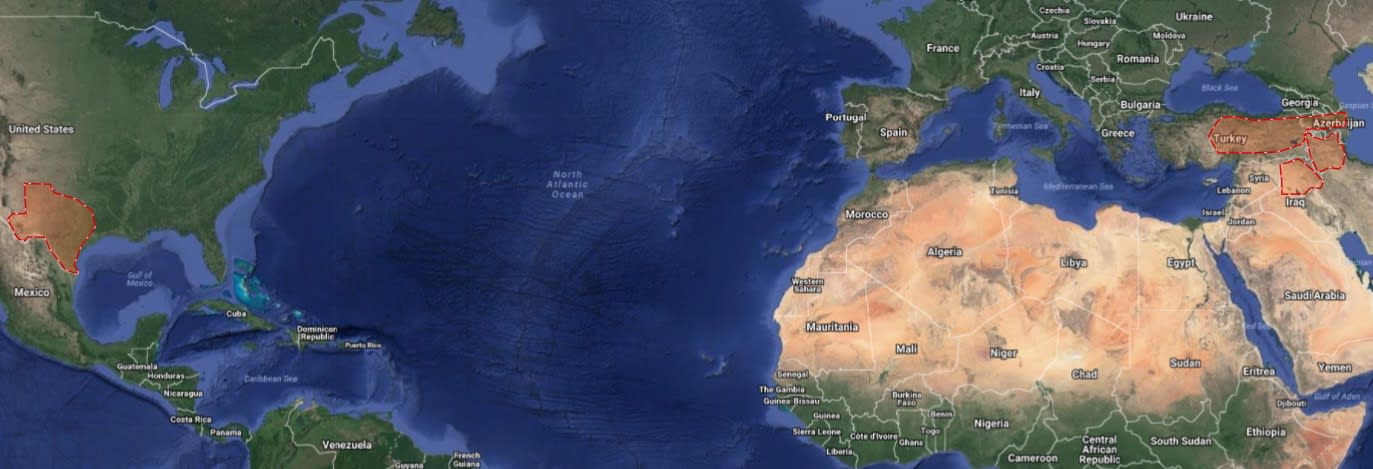
With hunting in Iran not available to U.S. citizens, it is difficult to obtain an Armenian mouflon. However, a small free range herd is presently found in West Texas on a ranch owned by Clayton & Modesta Williams. The Ovis World Slam does accept the Armenian mouflons from that ranch at present.
Conservation Status
IUCN has not assigned this subspecies its own conservation status.