
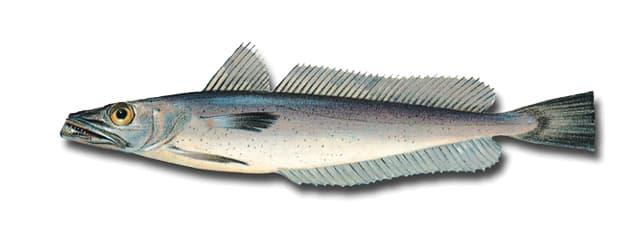
Taxonomy
- Kingdom
- Animalia
- Phylum
- Chordata
- Class
- Actinopterygii
- Order
- Perciformes
- Family
- Merlucciidae
- Genus
- Merluccius
- Species
- hubbsi
Habitat
Argentine hake primarily inhabit the continental shelves of the Southwest Atlantic Ocean, from southern Brazil to Argentina and the Falkland Islands. They prefer cold, temperate waters at depths of 50 to 500 meters over sandy or muddy bottoms. These areas provide ample prey and shelter from stronger currents.
Diet
Argentine hake feed mainly on small fish such as anchovies and lanternfish, as well as squid and crustaceans like shrimp. They are nocturnal predators that hunt in schools, using ambush tactics in deeper waters. Feeding activity peaks at night when they are most active.
Behavior
Argentine hake are schooling fish that form large groups for protection and feeding, often migrating seasonally to follow prey or warmer waters. They are primarily nocturnal, spending the day near the ocean floor and becoming more active at night. These fish exhibit territorial behavior during spawning seasons and can evade predators through rapid schooling movements.
Fishing
Angentine hake, a prized target in the Southwest Atlantic from Brazil to Argentina and the Falkland Islands, offers exciting deep-sea fishing opportunities that support conservation through angler-funded programs and habitat protection. Target them using bottom fishing or jigging techniques in depths of 50 to 500 meters over sandy or muddy bottoms, focusing on schooling fish with strong, medium-heavy rods (7-9 feet), conventional reels spooled with 20-50 lb test line, and sturdy sinkers to reach the ocean floor; effective baits include live anchovies, squid strips, or shrimp, while metal jigs and soft plastics mimicking small fish work well for lures. The best season runs from late winter through early summer during their spawning migrations, with peak activity at night when they feed aggressively, making dusk to dawn the optimal time for bites. Focus on continental shelf areas with cold, temperate waters, using fish finders to locate schools and practicing catch-and-release for undersized fish to maintain healthy populations. Record sizes reach up to 1 meter in length and around 2 pounds 8 ounces, highlighting the thrill of landing these fighters—check local IGFA records for specifics in your region. Conservation efforts, including slot limits and regulated seasons in Argentine waters, are effective management tools funded by fishing licenses that help combat overfishing and protect these stocks, ensuring sustainable populations for future anglers.
Conservation Status
Listed as Not Evaluated by IUCN.