
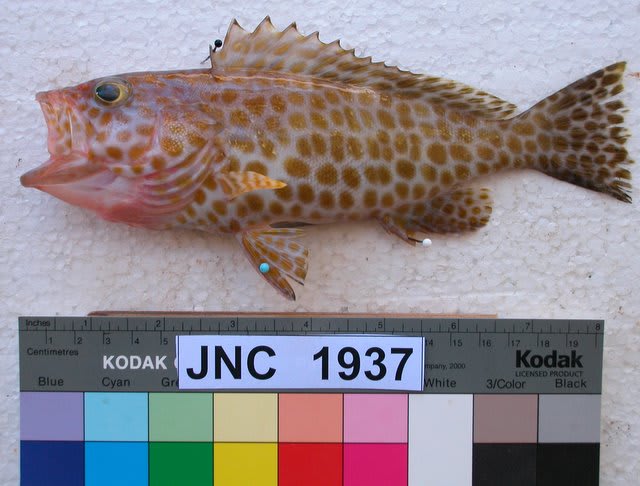
Taxonomy
- Kingdom
- Animalia
- Phylum
- Chordata
- Class
- Actinopterygii
- Order
- Scorpaeniformes
- Family
- Serranidae
- Genus
- Epinephelus
- Species
- areolatus
Habitat
The areolate grouper inhabits coral reefs, rocky substrates, and lagoon areas in tropical and subtropical waters. It prefers depths from 1 to 150 meters, often found around structures like caves and overhangs in the Indo-Pacific region. These environments provide ample hiding spots and hunting opportunities.
Diet
The areolate grouper primarily feeds on small fish, crustaceans, and cephalopods such as squid. It employs an ambush strategy, hiding among reefs and striking at prey during the day. Feeding activity peaks at dawn and dusk when prey is more abundant.
Behavior
The areolate grouper is generally solitary and territorial, defending its reef territory from intruders. It is most active during the day, patrolling for food, and often rests in crevices or under ledges at night. This species forms spawning aggregations during reproductive periods, which can involve coordinated movements.
Fishing
The areolate grouper is a popular sport fish in the Indo-Pacific region, from the Indian Ocean to the Western Pacific, where recreational fishing supports conservation through license fees that fund coral reef protection and habitat restoration programs. Target them using bottom fishing or jigging techniques around coral reefs, rocky substrates, and lagoon areas in depths of 1 to 150 meters, focusing on structures like caves and overhangs where they ambush prey. Use medium-heavy rods with 20-30 lb test line, sturdy reels with good drag, and circle hooks to handle their strong fights; effective baits and lures include live shrimp, small fish, squid, or metal jigs and soft plastics that mimic crustaceans and cephalopods. The best season is during warmer months from spring to summer, with peak activity at dawn and dusk when feeding is most intense. The largest recorded specimen weighs up to 3 pounds 3 ounces, highlighting the species' potential for exciting catches. Conservation efforts, such as catch-and-release practices and angler-supported stocking programs, help maintain stable populations, with slot limits in some areas serving as effective tools to ensure sustainable fishing and protect these tropical waterways.
Conservation Status
Listed as Least Concern by IUCN.