
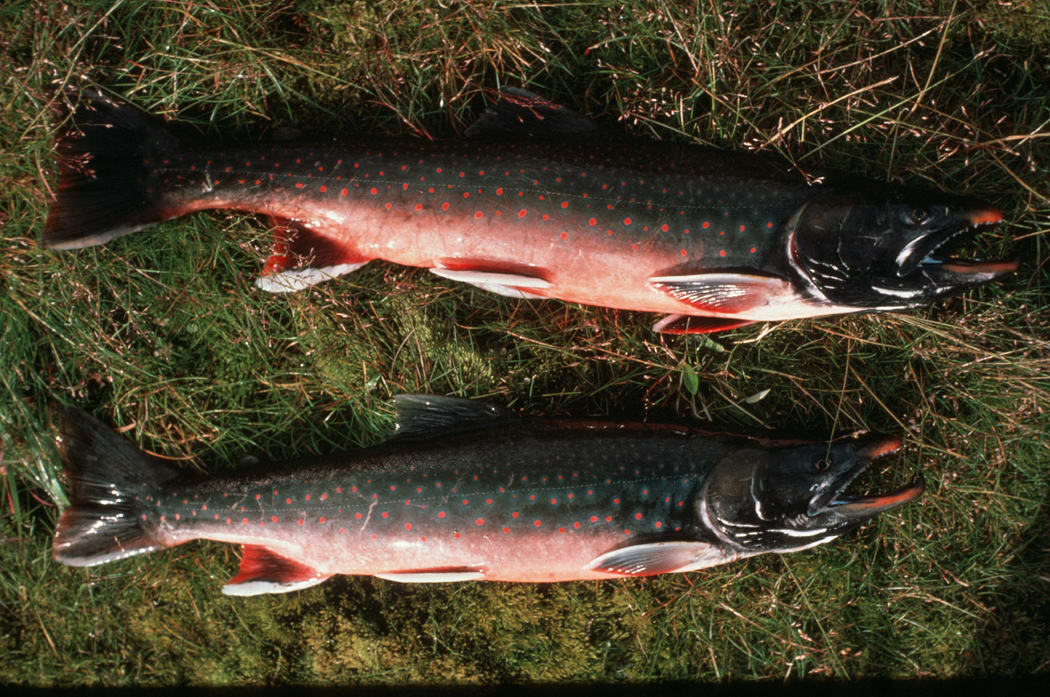
Overview
Common mature size is 8 to 40 pounds. The largest specimen recorded was 124 pounds, netted in 1896. Striped bass are believed to live for up to 30 years. The maximum length is 1.8 m (5.9 ft). The average size is about 67–100 cm (2.20–3.28 ft).
Taxonomy
- Kingdom
- Animalia
- Phylum
- Chordata
- Class
- Actinopterygii
- Order
- Perciformes
- Family
- Salmonidae
- Genus
- Salvelinus
- Species
- alpinus
Habitat
The most northerly of all freshwater fish, the Arctic Char is circumpolar in distribution, occurring around the globe from Maine and New Hampshire in the United States northward across northern Canada, Alaska and the Aleutian Islands, and from northern Russia south to Lake Baikal and Kamchatka as well as in Iceland, Great Britain, Scandinavia, the Alps, and Spitsbergen, among other places. An anadromous species (except where it has become landlocked), the Arctic Char always returns from the sea to spawn in fresh water, usually in lakes or quiet pools of rivers over gravel bottom. It spawns in autumn or winter when water temperatures reach 4 degrees Fahrenheit, or less.
Diet
Arctic char primarily feed on insects, crustaceans, smaller fish, and plankton, with their diet varying by life stage and habitat. They are opportunistic feeders, often hunting in schools or individually during dawn and dusk in open waters. In freshwater, they consume more benthic organisms like worms and larvae.
Behavior
Arctic char are generally solitary but form schools in open water for feeding and migration. They are most active in cold water, exhibiting anadromous behavior where they move between freshwater and marine environments, and become territorial during spawning. They are known for their agility in swift currents and ability to adapt to low-light conditions.
Fishing
The Arctic Char is a food and game fish par excellence.
Conservation Status
Listed as Least Concern by IUCN.