
Overview
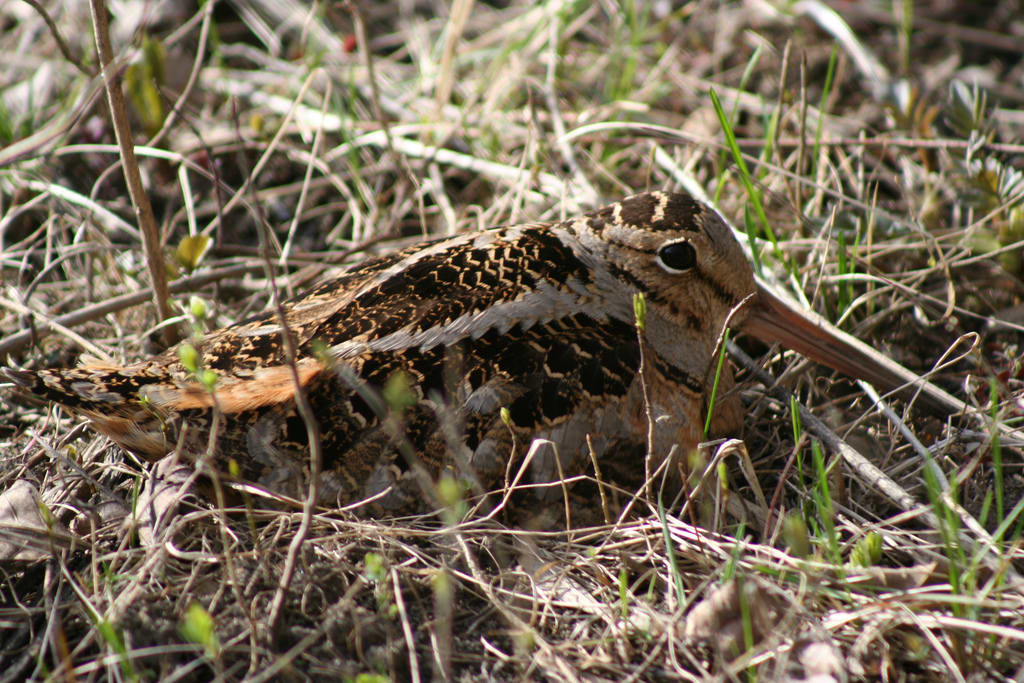
The plumage is a cryptic mix of different shades of browns, grays, and black. The chest and sides vary from yellowish white to rich tans. The nape of the head is black, with three or four crossbars of deep buff or rufous. The feet and toes, which are small and weak, are brownish gray to reddish brown. The woodcock uses its long prehensile bill to probe in the soil for food, mainly invertebrates and especially earthworms. A unique bone-and-muscle arrangement lets the bird open and close the tip of its upper bill, or mandible, while it is sunk in the ground. Both the underside of the upper mandible and the long tongue are rough-surfaced for grasping slippery prey.
Taxonomy
- Kingdom
- Animalia
- Phylum
- Chordata
- Class
- Bird
- Family
- Scolopacidae
- Genus
- Scolopax
- Species
- minor
Habitat
Live in wet thickets, moist woods, and brushy swamps. Ideal habitats feature early successional habitat and abandoned farmland mixed with forest. In late summer, some woodcock roost on the ground at night in large openings among sparse, patchy vegetation.
Diet
They eat mainly invertebrates, particularly earthworms (Oligochaeta). They do most of their feeding in places where the soil is moist. They forage by probing in soft soil in thickets, where they usually remain well-hidden from sight. Other items in the diet include insect larvae, snails, centipedes, millipedes, spiders, snipe flies, beetles, and ants. A small amount of plant food is eaten, mainly seeds. Woodcock are crepuscular, being most active at dawn and dusk.
Behavior
The woodcock uses its long prehensile bill to probe in the soil for food, mainly invertebrates and especially earthworms. A unique bone-and-muscle arrangement lets the bird open and close the tip of its upper bill, or mandible, while it is sunk in the ground. They migrate at night. They fly at low altitudes, individually or in small, loose flocks. Flight speeds of migrating birds have been clocked at 16 to 28 miles per hour (26 to 45 kilometers per hour). However, the slowest flight speed ever recorded for a bird, 5 miles per hour (8 kilometers per hour), was recorded for this species. It is believed that woodcock orient visually using major physiographic features such as coastlines and broad river valleys. Both the autumn and spring migrations are leisurely compared with the swift, direct migrations of many passerine birds.
Hunting
Upland game bird most effectivly hunted with a bird dog. A true gentlemans bird.
Conservation Status
Listed as Least Concern by IUCN.