
Overview
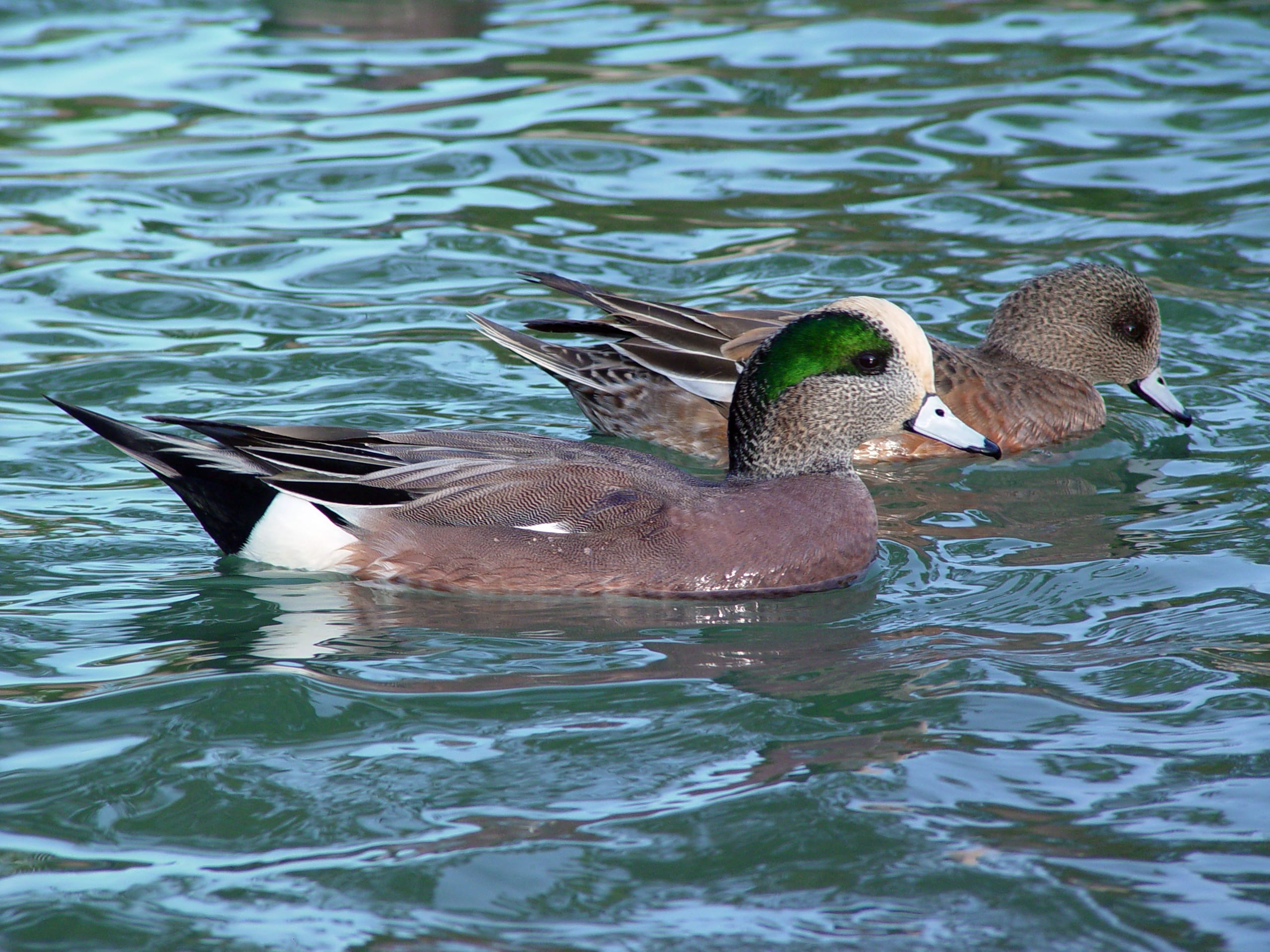
The breeding male (drake) is a striking bird with a mask of green feathers around its eyes and a cream colored cap running from the crown of its head to its bill. This white patch gives the wigeon its other common name, baldpate (pate is another word for head). Their belly is also white. In flight, drakes can be identified by the large white shoulder patch on each wing. These white patches flash as the birds bank and turn. In non-breeding (eclipse) plumage, the drake looks more like the female. The hens are much less conspicuous, having primarily gray and brown plumage. Both sexes have a pale blue bill with a black tip, a white belly, and gray legs and feet. The wing patch behind the speculum is gray. They can be distinguished from most ducks, apart from Eurasian wigeon, by shape. However, that species has a darker head and all grey underwing. The head and neck coloring of the female is different as opposed to the Eurasian wigeon.
Taxonomy
- Kingdom
- Animalia
- Phylum
- Chordata
- Class
- Bird
- Family
- Anatidae
- Genus
- Anas
- Species
- americana
Habitat
The American Wigeon nest further north than any dabbling duck. They breed in Alaska to Northwest Canada. While up north in breeding grounds, they are located around shallow lakes and marshy slews with vegetation. They are the first bird to arrive at the winter grounds the south. Pacific flyway Wigeon winter in the California area and the Central flyway Wigeon winter around the Texas Coastal areas.
Diet
While on the water, wigeon often gather with feeding coots and divers, and are known to grab pieces of vegetation brought to the surface by diving water birds. For this reason, they are sometimes called poacher or robber ducks. Wigeon also commonly feed on dry land, eating waste grain in harvested fields and grazing on pasture grasses, winter wheat, clover, and lettuce. Having a largely vegetarian diet, most wigeon migrate in the fall well before northern marshes begin to freeze.
Behavior
The American wigeon is highly gregarious outside of the breeding season and will form large flocks.
Hunting
Typically hunted with a 12 ga shotgun. Shot size #2-4 is sufficient. Effectively hunted with decoys and calling. Dogs are used for bird retrieval. Steel shot is required for waterfowl in the United States.
Conservation Status
Listed as Least Concern by IUCN.