
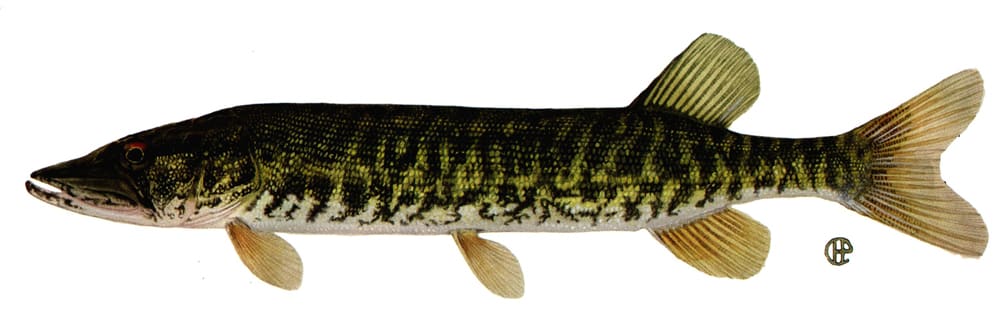
Taxonomy
- Kingdom
- Animalia
- Phylum
- Chordata
- Class
- Actinopterygii
- Order
- Perciformes
- Family
- Esocidae
- Genus
- Esox
- Species
- americanus
Habitat
Grass pickerel inhabit quiet, vegetated freshwater environments such as ponds, lakes, and slow-moving streams with abundant aquatic plants for cover. They prefer shallow waters with muddy or sandy bottoms in the eastern United States and southeastern Canada. These areas provide both hiding spots and ample prey.
Diet
Grass pickerel primarily eat small fish like minnows, as well as insects, crayfish, and amphibians. They are ambush predators that lie in wait among vegetation and strike quickly at passing prey. Feeding activity peaks during dawn and dusk in low-light conditions.
Behavior
Grass pickerel are solitary and territorial, often remaining hidden in dense vegetation to ambush prey. They are most active during low-light periods like dawn and dusk, and exhibit aggressive strikes when hunting. This species is generally wary of open areas and prefers to stay concealed.
Fishing
Grass pickerel offer exciting light-tackle angling opportunities in vegetated waters, where the best techniques involve stealthy presentations like casting small lures or using live bait to mimic their preferred prey, such as minnows or insects—opt for a slow retrieve near cover to trigger their ambush strikes. Use ultra-light spinning rods with 4-6 lb test line, small hooks (size 6-10), and reels with a smooth drag to handle their aggressive runs without breaking off in weeds; effective baits and lures include small spinnerbaits, jigs with soft plastics, or live minnows rigged weedless for better maneuverability in dense vegetation. The prime season runs from spring through early summer when water temperatures hit 50-60°F during spawning, with peak activity at dawn and dusk in low-light conditions that enhance their predatory behavior. Target them in shallow, vegetated habitats like ponds, lakes, and slow-moving streams across the eastern United States and southeastern Canada, focusing on areas with muddy or sandy bottoms and abundant aquatic plants for cover—cast along edges of weed beds or drop-offs for the best results. Record sizes reach up to 15 inches and 1 pound, with the IGFA all-tackle world record for pickerel species highlighting the thrill of these feisty fighters. Conservation-wise, grass pickerel populations are stable and listed as Least Concern, benefiting from angler-funded programs that support habitat restoration and stocking efforts; practice catch-and-release to maintain healthy populations, adhering to slot limits and seasonal regulations as effective tools that ensure sustainable fishing and protect these waterways for future generations.
Conservation Status
Listed as Least Concern by IUCN.