
Overview
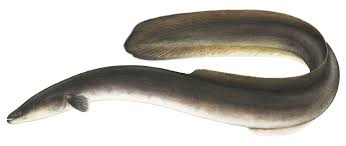
The American eel has a slender snakelike body with very small scales, and the fish may appear naked. A long dorsal fin usually extends for more than half the length of the body and is continuous with a similar ventral fin. Pelvic fins are absent. The back may be olive-green to brown shading to greenish-yellow on the sides and light gray or white on the belly.
Taxonomy
- Kingdom
- Animalia
- Phylum
- Chordata
- Class
- Actinopterygii
- Order
- Anguilliformes
- Family
- Anguillidae
- Genus
- Anguilla
- Species
- rostrata
Habitat
The American eel occurs in a variety of Habitats. Known from Greenland to Brazil, it probably spans a wider range of latitudes than any other species in North America. American eels occur as far west as New Mexico, and are common throughout the Caribbean and the West Indies. Although it is native to much of Texas, the construction of dams, which impede upstream spawning migrations, has eliminated this species from most central and western areas of the state.
Diet
Fish, Insects, Crabs, Worms, Frogs, Fish Eggs, Clams, Other Eels.
Behavior
Like the European eel, the American eel spawns during the winter in the Sargasso Sea, a tropical area northeast of Cuba. Adult eels spend most of their lives in freshwater, although the amount of time may vary among individuals. At some point, however, adults leave their freshwater Habitats and move toward the Sargasso Sea. Neither adults or eggs have been collected in the vicinity of the Sargasso Sea, but newly hatched eels are found there. Presumably, spawning takes place in deep water and the adults die shortly thereafter. Young eels are transparent and leaf shaped. By the time American eels get close to the coast they are about 6 inches in length. The species begins to develop coloration only when the young reach nearshore areas. Once they reach freshwater, females continue to migrate deep inland as far up rivers and tributaries as they can. Males remain much closer to coastline areas. Eels tend to hide under rocks during the day, and venture out only at night to feed.
Fishing
Although many anglers are put off by the snake-like appearance of eels and the prodigious amounts of slime they produce when captured, eels are in fact exceptionally good fish. In Texas, they are usually caught by anglers fishing for something else.
Conservation Status
Listed as Endangered by IUCN.