
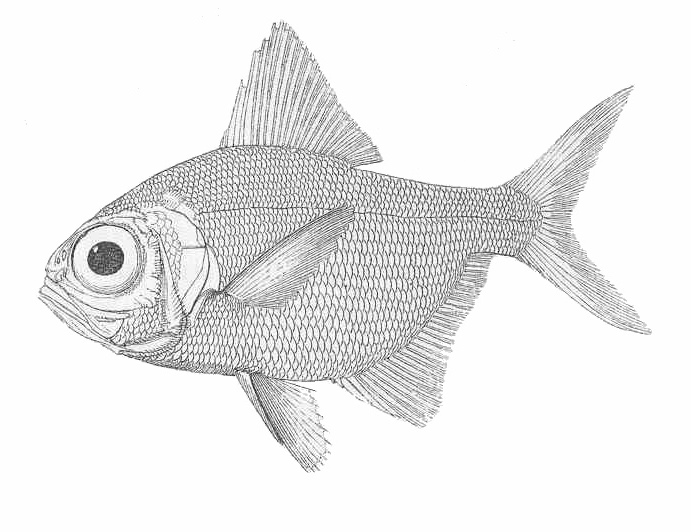
Overview
Georges Cuvier, in the third volume of his 22-volume ichthyology collection, Histoire Naturelle des Poissons, gives the first scientific description of the Alfonsino.
Taxonomy
- Kingdom
- Animalia
- Phylum
- Chordata
- Class
- Actinopterygii
- Order
- Characiformes
- Family
- Berycidae
- Genus
- Beryx
- Species
- decadactylus
Habitat
They have been known to be found in temperate and subtropical ocean waters neary worldwide but this is also known to be uncommon.
Diet
Alfonsino primarily feed on small fish, squid, and crustaceans in mid-water depths. They are ambush predators that hunt actively during the day in schools, often targeting prey in the water column between 200-800 meters.
Behavior
Alfonsino are schooling fish that aggregate around seamounts and underwater ridges, often in large groups for protection and feeding. They are primarily diurnal, actively foraging during the day and retreating to deeper waters at night. Their behavior includes seasonal migrations related to spawning and food availability.
Fishing
Alfonsino are a challenging deep-sea target for experienced anglers in temperate and subtropical waters worldwide, including the Atlantic, Indian, and Pacific Oceans, where they school around seamounts and underwater ridges at depths of 200-800 meters—focus on areas with strong currents and structure for the best results. The most effective techniques involve vertical jigging or trolling to mimic their ambush predation on small fish and squid, using heavy tackle like rods rated for 20-50 pounds, conventional reels with 300-500 yards of 30-50 pound test line, and sturdy leaders to handle their deep-water fight; opt for baits and lures such as live baitfish, squid strips, or brightly colored metal jigs to entice strikes. The prime season runs from spring through fall during warmer months when they migrate for spawning, with daytime hours being optimal as they actively feed in schools. Anglers can aim for impressive sizes, with the IGFA all-tackle world record at 8 pounds 5 ounces, underscoring their potential as a sport fish. Conservation efforts for Alfonsino, listed as Least Concern by the IUCN, benefit from regulated fishing practices like catch limits and habitat protection programs funded by angler licenses, ensuring sustainable populations and supporting broader aquatic conservation through excise taxes and stocking initiatives that maintain healthy deep-water ecosystems.
Conservation Status
Listed as Least Concern by IUCN.