
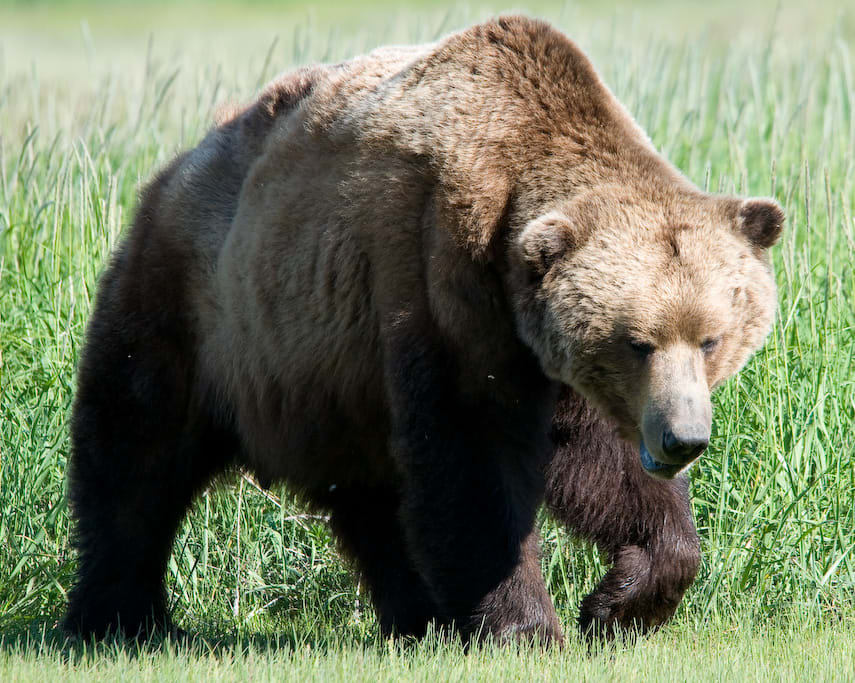
Taxonomy
- Kingdom
- Animalia
- Phylum
- Chordata
- Class
- Mammal
- Order
- Carnivora
- Family
- Ursidae
- Genus
- Ursus
- Species
- Ursus arctos
Habitat
These bears primarily inhabit coastal regions of the Alaskan Peninsula, including forests, tundra, and river valleys. They prefer areas near salmon streams and berry patches for feeding. Geographic preferences include rugged, remote terrains with access to both marine and terrestrial resources.
Diet
Their diet consists of salmon, berries, roots, and grasses, with a strong focus on fish during spawning seasons. They are opportunistic feeders, scavenging carrion and hunting small mammals like ground squirrels when plant foods are scarce. Feeding often occurs in the evening or early morning near rivers and coastal areas.
Behavior
These bears are mostly solitary, except for mothers with cubs, and are territorial, marking boundaries with scent. They exhibit crepuscular activity patterns, being most active at dawn and dusk, and can display bluff charges when threatened. Notable behaviors include fishing in streams and hibernation in dens during winter months.
Hunting
Hunting the Alaskan Peninsula brown bear demands precision and respect for regulated frameworks in Alaska, where it serves as a key conservation tool by funding wildlife management programs. Employ spot-and-stalk tactics in coastal habitats like river valleys and tundra, focusing on fall seasons when bears are concentrated near salmon streams for feeding; use high-powered rifles in calibers such as .338 Winchester Magnum or .375 H&H for reliable penetration, with shot placement targeting the vital organs just behind the shoulder for a quick, ethical harvest. Terrain strategy involves navigating remote, rugged areas with binoculars for observation and wind direction to avoid detection, while the best timing aligns with Alaska's controlled hunting seasons, typically September to October, to maintain population health. Trophy criteria emphasize skull size for Boone & Crockett records, with top entries often measuring over 28 inches; legal hunting is available in specific Alaskan Peninsula regions through limited draw permits issued by the Alaska Department of Fish and Game, which uses hunter fees to support anti-poaching efforts, habitat restoration, and overall population stability, demonstrating how regulated hunting bolsters the Least Concern status of brown bears as per IUCN assessments.
Conservation Status
The brown bear species, including Ursus arctos gyas, is listed as Least Concern by the IUCN, with a stable population trend in Alaska. Major threats include habitat fragmentation due to human development and legal hunting.