
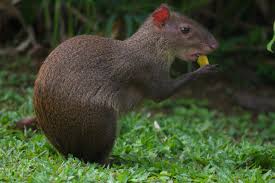
Taxonomy
- Kingdom
- Animalia
- Phylum
- Chordata
- Class
- Mammal
- Family
- Dasyproctidae
- Genus
- Dasyprocta
Habitat
Agoutis primarily inhabit tropical rainforests and secondary forests in Central and South America, from Mexico to Brazil. They prefer areas with dense undergrowth, leaf litter, and proximity to water sources for foraging and escape. These rodents avoid open areas, thriving in environments with ample cover from vegetation.
Diet
Agoutis mainly consume fruits, nuts, seeds, and roots foraged from the forest floor. They occasionally eat insects, leaves, or small vertebrates, supplementing their diet based on seasonal availability. Feeding activity peaks during the day, as they are diurnal and use their strong incisors to crack hard shells.
Behavior
Agoutis are primarily solitary or live in pairs, marking territories with scent glands and vocalizations to ward off intruders. They are diurnal, active during the day for foraging and resting in burrows or dense vegetation at night, and exhibit agile, quick movements to evade threats. They are known for food-caching behavior, burying items like nuts for later consumption.
Conservation Status
The IUCN status for most Dasyprocta species is Least Concern, though some like the black agouti are Near Threatened due to declining populations. Major threats include habitat loss from deforestation and overhunting for meat in some regions.