
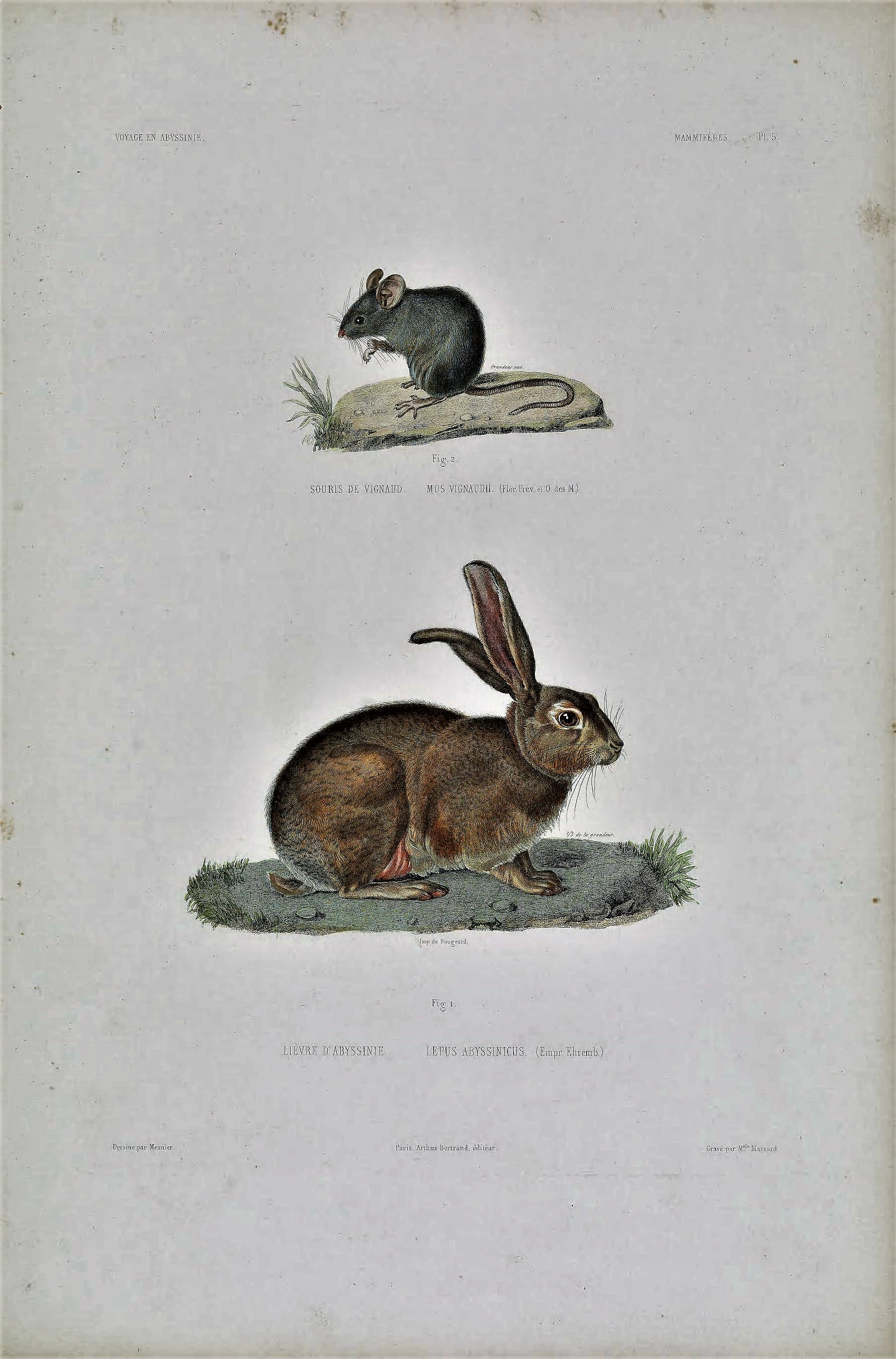
Taxonomy
- Kingdom
- Animalia
- Phylum
- Chordata
- Class
- Mammal
- Order
- Lagomorpha
- Family
- Leporidae
- Genus
- Lepus
Habitat
The Abyssinian hare inhabits highland grasslands, shrublands, and agricultural areas in Ethiopia and Eritrea, often at elevations up to 4,000 meters. It prefers open terrains with nearby cover for hiding, and it adapts well to human-modified landscapes like farmlands.
Diet
The Abyssinian hare primarily eats grasses, herbs, and leaves, focusing on young, tender shoots for nutrition. It is mainly nocturnal, feeding at dusk and dawn to avoid predators, and its diet shifts seasonally based on plant availability.
Behavior
Abyssinian hares are typically solitary or form loose pairs, being most active at night to forage and avoid threats. They exhibit territorial behavior by marking areas with scent and use rapid, zigzagging runs to escape predators. During the day, they rest in shallow depressions or forms in the ground for concealment.
Conservation Status
The IUCN classifies the Abyssinian hare as Least Concern with a stable population trend, though it faces threats from habitat loss due to agriculture and overgrazing in parts of its range.